
Affiliate Disclosure
Some links on this page are affiliate links. As an Amazon Associate, we earn from qualifying purchases — at no extra cost to you. We do not buy, install, or physically handle the cameras we cover; our rankings come from aggregated owner reviews, ratings and expert consensus. Commissions never change our verdicts. How we rank · full disclosure.
Short answer: yes, for most home positions, 1080p is genuinely good enough. It resolves a face clearly at the distance a doorway or entryway camera typically covers, it is sharp enough for general description — clothing, build, vehicle color — across an average yard, and it is the resolution the single most-reviewed cameras in this category, including the market-leading indoor and doorbell models, still ship with. The idea that 1080p is now obsolete is more marketing pressure toward 2K and 4K upsells than an honest technical verdict.
Where 1080p genuinely falls short is distance and crop. A face at fifteen feet resolves well; the same face at forty feet, or the same footage cropped in after the fact to check a detail, loses enough pixels that identification becomes uncertain. If your specific need is reading a license plate, identifying a face across a long driveway, or zooming into a corner of the frame after an event, 1080p is the wrong resolution to buy for that job specifically.
Recommended Cameras Across Resolutions
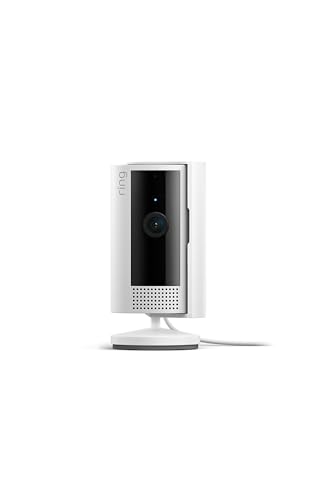
Best for 1080p at an entry-level price with the deepest review base we track.

Best for a genuine step up to 2K if 1080p leaves you wanting more detail.

Best for the sharpest option if identification at distance is the goal.
Is 1080p Good Enough? The Honest Baseline
It helps to state the sufficiency question directly before getting into specifics: is 1080p good enough for a security camera? For the placements most homeowners actually use — a front door, a porch, an entryway, most indoor rooms — the answer is yes, without much qualification. The resolution complaint that does show up in owner reviews is almost never "1080p wasn't sharp enough to identify my visitor." It is almost always about a specific edge case: a face at real distance, a cropped-in zoom after the fact, or a license plate. Outside those specific cases, 1080p keeps up.
What 1080p Actually Resolves
1080p, also written as Full HD, delivers roughly two million pixels across the frame. At the distance most home cameras actually work — a doorway, a porch, a driveway from twenty or so feet — that is enough resolution to read a face clearly, distinguish clothing color and general build, and recognize a returning visitor or delivery driver without ambiguity. This is also why 1080p remains the resolution behind some of the highest-rated, most-reviewed cameras in every category this site tracks: it does the job the overwhelming majority of buyers actually need, at a price meaningfully below 2K and 4K equivalents.
The honest caveat is that pixel count is only one input into image quality. Sensor size, lens quality, HDR handling of bright and dark areas in the same frame, and compression all affect how a 1080p image actually looks, which is why two cameras both labeled 1080p can look noticeably different in practice. A well-engineered 1080p camera from an established manufacturer often outperforms a cheap 2K camera with a weak sensor behind it.
What Owner Reviews Actually Say About 1080p
Across the review base for cameras this site tracks, 1080p models remain among the most-reviewed and highest-rated in nearly every category — indoor cameras, video doorbells, budget outdoor cameras. That is not an accident of pricing alone; it reflects a genuinely large number of households whose actual use case never pushes past what 1080p delivers. Complaints specifically about resolution being "too low" are a small minority of negative reviews on these products, and when they do appear, they are almost always tied to one of the three upgrade scenarios below rather than to everyday doorway or room coverage.
The more common complaints on 1080p cameras are about night performance, notification delay and app reliability — none of which resolution fixes. That pattern is worth remembering before spending extra on 2K or 4K for a problem that a better night vision system or a stronger app would actually solve.
When to Pay for 2K or 4K Instead
Upgrade past 1080p for three specific reasons, and treat anything else as a nice-to-have rather than a necessity. First, distance: a long driveway, a wide backyard, or any position where the subject is regularly thirty feet or further from the lens benefits from the extra pixels holding up under distance loss. Second, crop: if you plan to zoom into footage after an event rather than relying on the framed shot, more resolution gives you more room to crop before the image falls apart. Third, specific identification tasks like license plates or small text, which genuinely need the extra detail 1080p cannot reliably deliver.
If none of those three apply to your situation — a normal front door, a porch, an indoor room — the money is generally better spent on a stronger night vision system, a floodlight, or continuous PoE recording than on resolution alone. See what resolution security camera do I need for the fuller placement-by-placement breakdown, and 2K vs 4K if you have already decided 1080p is not enough for your specific position.