
Affiliate Disclosure
Some links on this page are affiliate links. As an Amazon Associate, we earn from qualifying purchases — at no extra cost to you. We do not buy, install, or physically handle the cameras we cover; our rankings come from aggregated owner reviews, ratings and expert consensus. Commissions never change our verdicts. How we rank · full disclosure.
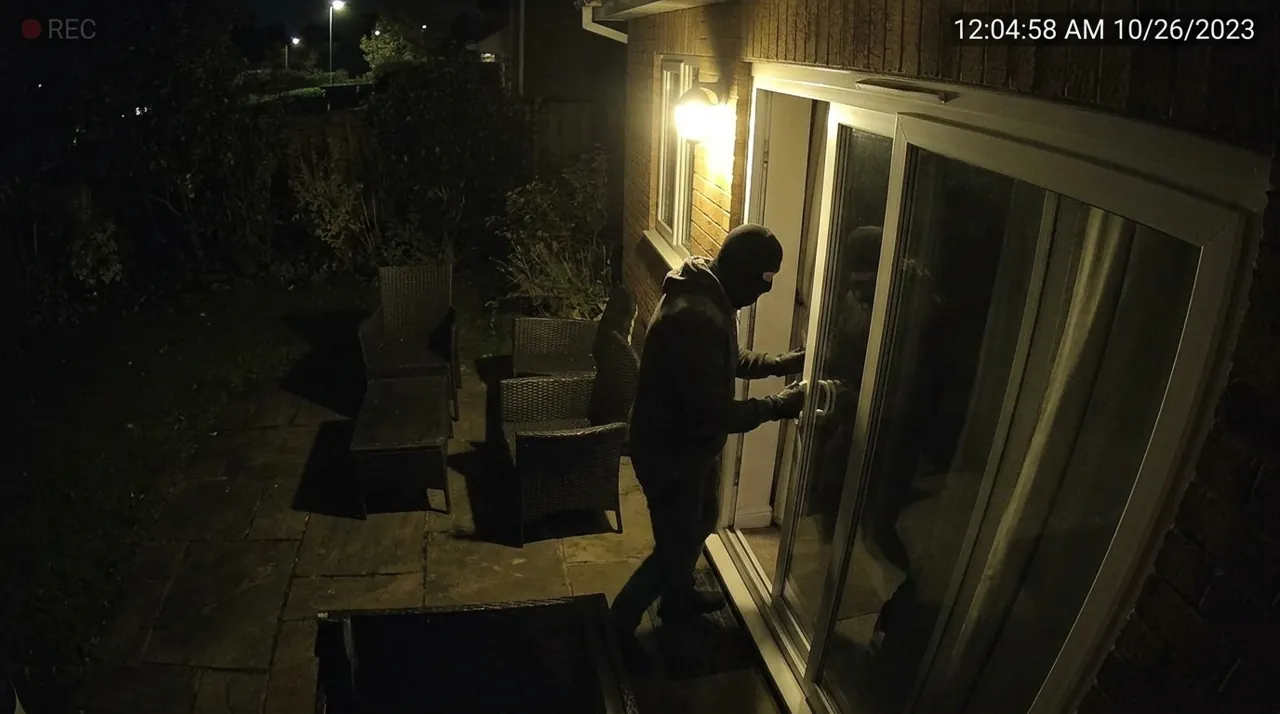
Honest answer: poorly, and at night usually not at all. A camera behind glass works acceptably in daylight, with reflections and glare as the ongoing nuisance. After dark it typically fails outright, because the camera’s own infrared LEDs bounce off the glass and back into the lens, producing a white glare or a total whiteout instead of a picture. If the goal is to watch something outside, mounting the camera outside the glass is the fix — not a setting, not a better camera.
This is one of the most common disappointments among new camera owners, and it is entirely predictable physics rather than a manufacturing flaw. Understanding why it happens also tells you exactly when shooting through a window is a reasonable compromise.
Recommended Cameras

Best for wired outdoor coverage with the deepest review base tracked on this site.

Best for front-door coverage with no wiring required.

Best for a no-subscription camera with local microSD recording.
Why It Fails After Dark
Almost every consumer camera lights its own scene at night with infrared LEDs arranged around the lens. Glass is highly reflective at infrared wavelengths — considerably more so than to visible light. Place those LEDs a few inches from a pane and a large share of their output comes straight back into the sensor.
The result is a bright white bloom filling part or all of the frame. Worse, the camera’s automatic exposure reacts to that brightness by stopping down, so whatever is genuinely out there in the dark is now underexposed as well as obscured. You end up with less visibility than if the camera had no night vision at all.
Several factors make it worse. Double or triple glazing adds more reflective surfaces. Low-emissivity coatings on modern energy-efficient windows are designed specifically to reflect infrared, which is exactly the wrong property here. Insect screens diffuse IR into an even haze. Any dust, condensation or film on the glass scatters it further. And a curved or textured pane can produce a bright arc across the middle of every clip.
Daylight Is Workable — With Caveats
During the day, with the IR emitters idle, a camera behind glass genuinely does see outside. Plenty of people run this arrangement successfully for keeping an eye on a driveway or a front path. But three problems persist and are worth planning around.
Reflections of the room. Glass reflects what is behind the camera. A lit lamp, a television, a bright wall or a window on the opposite side of the room will appear ghosted over the outdoor scene. This is worst when the interior is brighter than the exterior, which means dawn, dusk and overcast days are the awkward hours.
Glare and sun flare. A low sun striking the pane at an angle produces a wash across the frame that no exposure setting recovers. If the window faces east or west, expect a period each day where the footage is unusable.
Autofocus confusion. Some cameras lock focus on the glass surface, on a smudge, or on a raindrop rather than on the scene beyond, leaving everything outside soft. Fixed-focus cameras avoid this but cannot correct for it either.
Motion detection also degrades. Many cameras rely on pixel change plus, on better models, person recognition run on the video itself. Reflections and glare generate false motion, while genuine movement outside is dulled by the intervening glass, so you get more nuisance alerts and fewer of the ones you wanted.
If You Must Shoot Through Glass
Sometimes there is no choice — a rental where nothing may be drilled, an upper floor with no safe access, an HOA restriction. In that case, the measures that actually make a difference, in order of effect:
- Turn night vision off in the app. This removes the reflection at its source. It only works if the area outside carries some real light, so pair it with a porch light or a motion-activated floodlight left enabled overnight.
- Press the lens flush to the pane. Closing the air gap cuts the reflection substantially. A suction-cup or adhesive window mount designed for this purpose does the job better than propping the camera on a sill.
- Add a lens hood or foam collar. A ring of dark foam or a rubber hood around the lens blocks stray light — and stray IR — from reaching the glass sideways. This is the standard trick for dashboard cameras and works here for the same reason.
- Kill the light behind the camera. Close blinds elsewhere in the room, turn off lamps in the reflection path, and avoid pointing the camera at a window with a bright wall behind it.
- Clean both sides of the glass. Interior film and exterior grime both scatter light, and a pane that looks fine to the eye can be visibly hazy at the sensor.
What does not help: buying a more expensive camera. Premium sensors, better processing and higher resolution do nothing about a reflection, because the reflection is real light arriving at the lens. This is a placement problem, not a hardware problem.
The Better Alternatives
Move the camera outside the glass. A weather-rated outdoor camera under an eave sees the same scene without any of the above problems, in color when lit and in usable infrared when not. If drilling is the obstacle, several battery models mount on adhesive plates or clamp to a gutter, fence rail or downspout without a single hole — and battery cameras can be positioned and repositioned in minutes. The mounting height, angle and weatherproofing details are all in our guide on how to install a security camera, and the mistakes section there covers the window issue as one of the top install regrets.
Two other routes are worth considering. A video doorbell replaces an existing chime, requires no new hole, and covers the front approach from outside the glass. And if the interior camera exists because you want to see who is at the door without opening it, that job is better done by a doorbell than by a camera aimed through the sidelight.
Finally, keep the indoor camera indoors and give it an indoor job. An interior camera aimed at the entry hallway, the stairs or the area where valuables sit is doing something an outdoor camera cannot — and it will do it well, in the light it was designed for, without a pane of glass in the way.