
Affiliate Disclosure
Some links on this page are affiliate links. As an Amazon Associate, we earn from qualifying purchases — at no extra cost to you. We do not buy, install, or physically handle the cameras we cover; our rankings come from aggregated owner reviews, ratings and expert consensus. Commissions never change our verdicts. How we rank · full disclosure.
Short answer: no, an individual security camera does not use much electricity at all. A typical plug-in WiFi camera or a PoE camera draws roughly the same modest amount of continuous power as a phone charger or a small WiFi router — a trivial addition to a household electricity bill. Where the total starts to add up is a full multi-camera system running continuously, and specific power-hungry features like a built-in floodlight or a heater in a cold-climate camera, both of which draw meaningfully more than the camera's baseline sensor and radio.
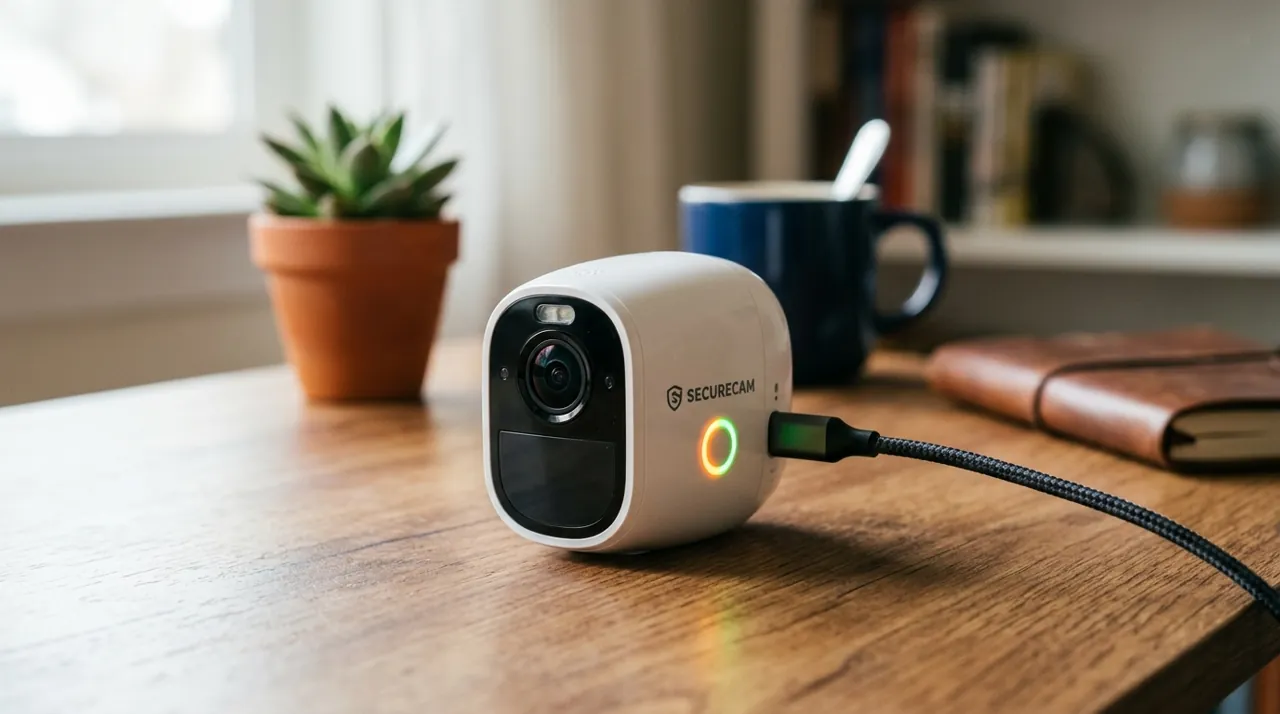
Recommended Cameras by Power Efficiency

Best for modest, plug-in-friendly power draw.

Best for efficient low-voltage PoE power delivery.

Best for one of the lowest-draw plug-in cameras in this comparison.
Do Security Cameras Use a Lot of Electricity? Breaking Down the Draw
A standard plug-in security camera, running its sensor, processor and WiFi radio continuously, draws in the range most small always-on electronics draw — comparable to a phone charger left plugged in, or a smart speaker. Multiply that by a household running several cameras and the combined draw is still modest next to genuinely power-hungry appliances like a refrigerator, an air conditioner or a water heater, which dwarf anything a camera system adds to a bill.
Battery cameras use essentially zero continuous household electricity, since they draw only briefly during a recharge cycle and nothing at all between charges — the tradeoff being the recurring recharge labor rather than an electricity cost. PoE cameras draw their modest power through the Ethernet cable from a PoE switch or NVR, which itself draws a continuous but still modest amount, comparable to a small computer left running.
What Actually Pushes the Number Up: Floodlight and Heater Draw
Floodlight cameras are the clearest exception to the "cameras use little power" rule — the LED floodlight itself draws considerably more than the camera's baseline sensor and radio, particularly if it is set to stay on for extended periods rather than triggering briefly on motion. Cameras with built-in heaters, sold specifically for extreme cold climates to keep the battery and electronics functioning in freezing temperatures, similarly add meaningful draw whenever the heater is actively running.
A large multi-camera NVR system running 24/7 continuous recording across many cameras, plus the NVR's own drive and processor, adds up to a more noticeable total than a single camera ever would, though even a substantial eight-camera system still lands well below the electricity cost of a major household appliance running the same hours.
Reducing Consumption Without Losing Coverage
For anyone specifically trying to minimize electricity use, motion-triggered recording rather than continuous 24/7 recording is the single biggest lever, since a camera doing meaningful processing only when triggered draws less on average than one running full video processing constantly. Setting a floodlight to a shorter on-duration, or to trigger only on person detection rather than any motion, similarly cuts its contribution without meaningfully reducing the deterrent or coverage value. See how long do security camera batteries last for the battery side of the power question, and floodlight cameras for the category where power draw matters most.
Putting the Cost in Household Context
It helps to compare a security camera system against devices most households already run without a second thought. A WiFi router, a cable modem, a smart speaker and a phone charger left plugged in all draw roughly comparable modest amounts continuously, and a camera system of similar scale simply joins that existing category of always-on electronics rather than introducing a new class of consumption. Owners who track their electricity use closely after adding a camera system typically report the change is difficult to isolate from normal month-to-month variation, which is itself a reasonable indicator of how small the actual impact is.
The one genuine exception worth budgeting for deliberately is a large floodlight-heavy installation running several bright, frequently-triggered lights through a high-traffic season — that specific combination is the closest a home camera system comes to meaningfully moving an electricity bill, and even then the effect is modest next to seasonal heating or cooling costs.
Solar Cameras Sidestep the Question Entirely
For anyone who wants to avoid grid electricity for a camera altogether rather than just minimize it, solar-powered cameras remove the household electricity question from the equation completely, drawing their power from a small panel instead. Solar works best on cameras positioned with consistent daily sun exposure, and the same low baseline power draw that makes standard cameras cheap to run on grid power is exactly what makes them practical to run on a modest solar panel instead.